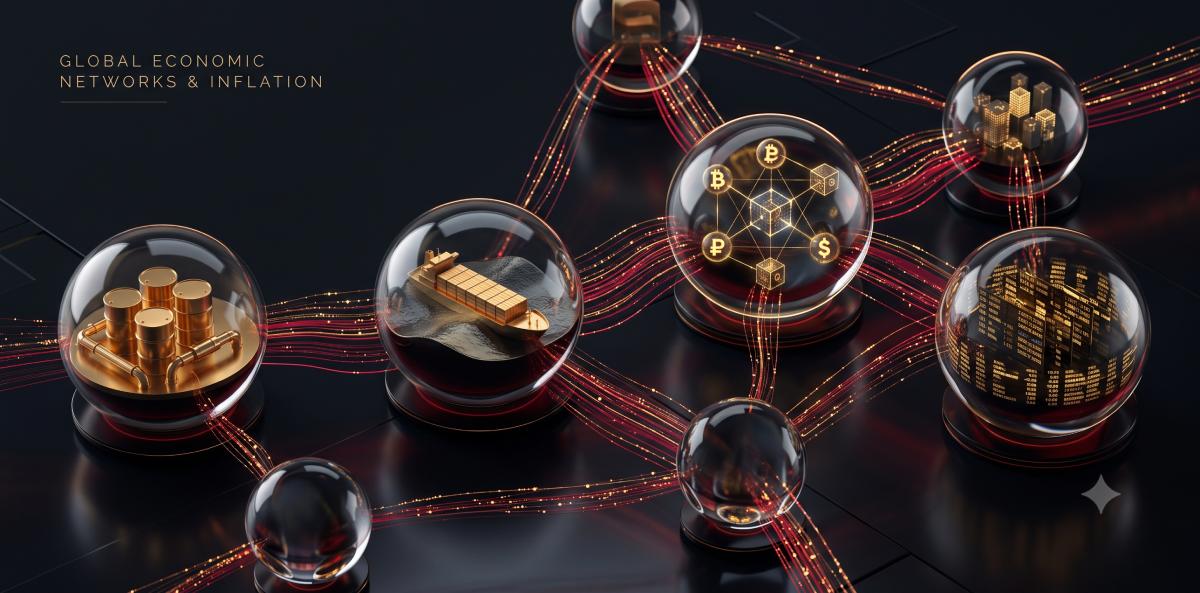
Inflation is no longer just an economic issue—it is becoming a humanitarian issue.
The world is entering an era where geopolitics, energy security, corporate strategy, climate events, and monetary policy are deeply interconnected. Wars, sanctions, trade restrictions, disruptions in key shipping routes, and uncertainty around major oil-producing regions have demonstrated how quickly global supply chains can be affected.
Oil remains the backbone of the global economy. Every rise in energy prices flows through transportation, manufacturing, agriculture, aviation, logistics, chemicals, construction, mining, healthcare, and even digital infrastructure through higher power costs. When energy becomes expensive, the cost of producing and delivering almost everything rises, creating inflation that touches every household.
⚠️ The Sectors Most Vulnerable to Prolonged Inflation
As systemic pricing pressures settle into the global network, structural vulnerabilities are amplifying across core industrial segments:
- Manufacturing & Heavy Industry: Heavily exposed to rising raw material inputs and direct baseload energy spikes.
- Automobile & EV Ecosystems: Facing compounding overheads from steel, aluminum, battery minerals, and long-haul maritime logistics.
- Aviation & Marine Shipping: Structurally constrained by fuel pricing, which consistently represents one of their largest underlying operating expenses.
- FMCG & Retail Networks: Compressed by surging costs across consumer packaging formats, inland transportation, and product distribution.
- Agriculture & Food Processing: Impacted by cascading input costs including chemical fertilizers, smart irrigation power, machinery fuel, and refrigerated storage.
- Construction & Infrastructure: Challenged by the escalating spot prices of cement, structural steel, skilled labor, and project financing.
- Technology & Data Centers: Increasingly vulnerable to localized grid power pricing as high-density AI computing scales electricity consumption.
- Healthcare & Pharmaceuticals: Compressed by the rising costs of chemical precursors, specialized cold logistics, and imported active ingredients.
💼 The Corporate Reality: Squeezed Margins and Capital Costs
For corporates, inflation doesn't just increase costs—it completely reshapes balance sheets. Companies face shrinking profit margins, higher borrowing costs, increased working capital requirements, inventory risk, wage inflation, and pressure from customers who resist price increases.
Businesses with weak pricing power may struggle to protect profitability, while stronger companies focus on automation, efficiency, supply-chain diversification, and operational resilience. Concurrently, governments continue balancing inflation, economic growth, energy security, and fiscal stability. Central banks may keep interest rates elevated if inflation remains persistent, making capital more expensive for businesses and slowing new investments.
🌍 The Human Consequence: Beyond the Financial Markets
For humanity, the consequences of structural inflation extend far beyond corporate earnings reports:
- Rising baseline costs for food, retail fuel, residential electricity, and essential healthcare.
- A steady, compounding decline in real household purchasing power.
- Heightened structural pressure on domestic jobs and real wage growth.
- A widening gap in global wealth distribution and systemic inequality.
- Escalating financial stress on vulnerable, developing frontier economies.
The coming months will remain highly sensitive to developments in energy markets, global trade, shipping routes, and geopolitical events. Any major disruption affecting oil supply, critical minerals, or international logistics could quickly spread through supply chains, increasing production costs and reinforcing inflationary pressures worldwide.
Final Thought
Markets will recover. Businesses will adapt. Economies will eventually stabilize. But the real challenge is not whether inflation returns to a target number. It is whether governments, corporations, and societies can build resilient supply chains, secure affordable energy, protect profitability without overburdening consumers, and ensure that economic progress benefits humanity as a whole.
In today's interconnected world, inflation is no longer just a number on an economic report—it is a force that reshapes corporate strategy, national priorities, and everyday life.