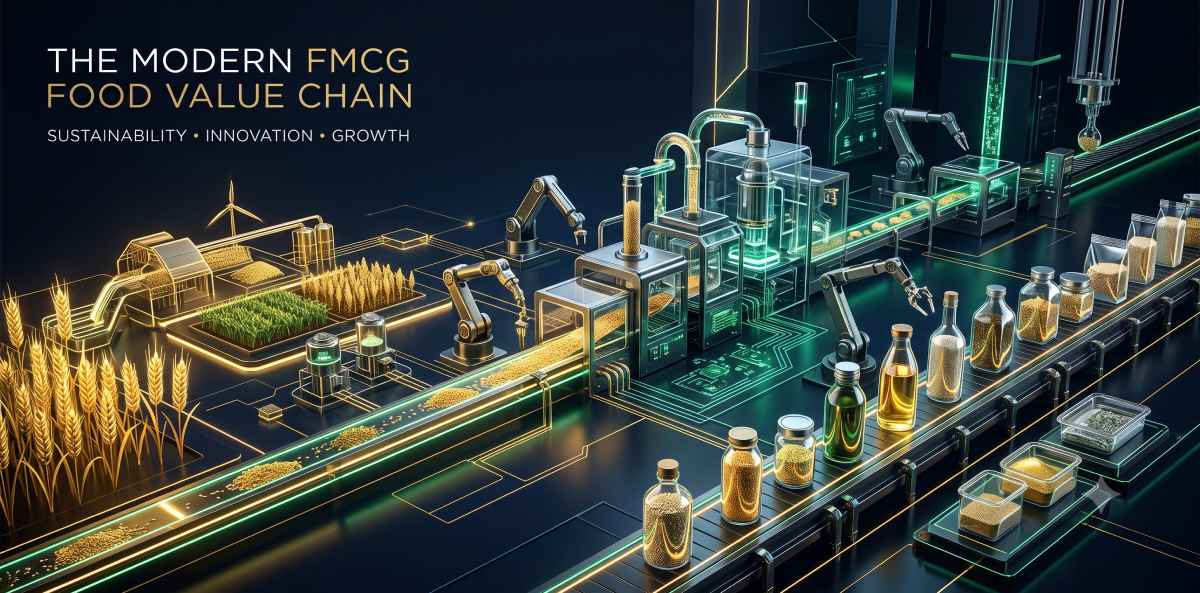
While AI, semiconductors, and crypto dominate headlines, another sector is quietly positioning itself for a long-term structural transformation: Agriculture & Agribusiness.
This isn't about short-term speculation or investment recommendations—it's about understanding a global sector that sits at the intersection of food security, technology, climate resilience, and infrastructure.
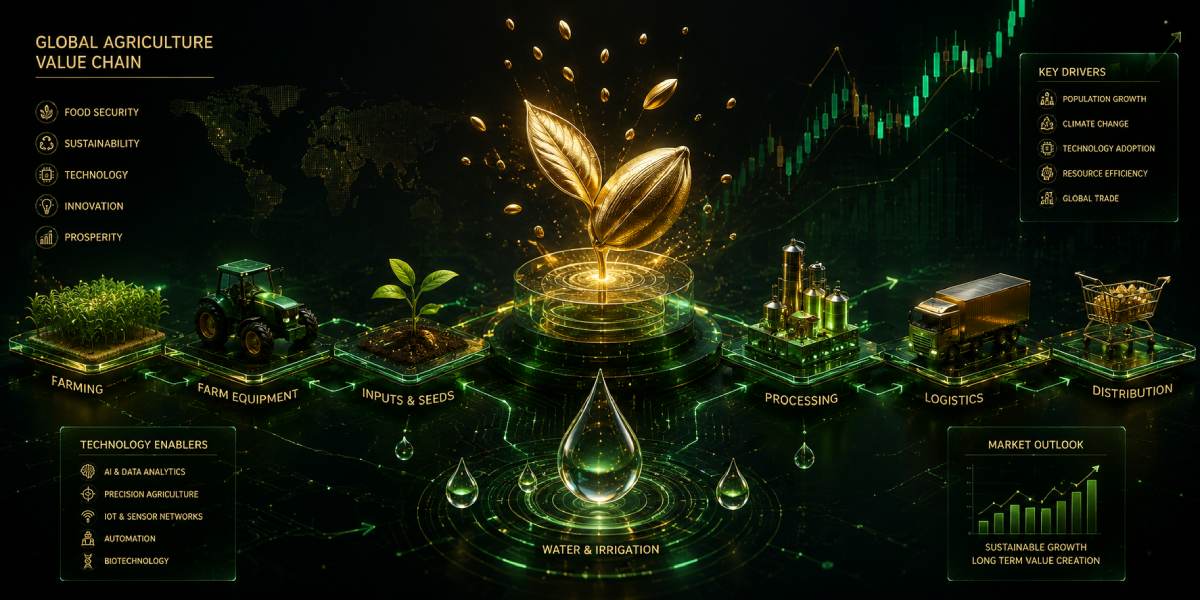
🌍 The Global Agriculture Value Chain
Agriculture extends far beyond farms. The ecosystem includes:
- 🌾 Grains: Wheat, Corn, Rice, Soybeans
- ☕ Soft Commodities: Coffee, Cocoa, Sugar, Cotton
- 🛢️ Edible Oils: Palm Oil, Soybean Oil, Canola
- 🚜 Farm Equipment & Automation
- 🧪 Fertilizers & Crop Nutrition
- 🌱 Seeds & Biotechnology
- 💧 Irrigation & Water Management
- 📦 Storage, Cold Chain & Logistics
- 🏭 Food Processing & Packaging
As global populations grow and arable land becomes increasingly constrained, the focus is shifting from producing more to producing smarter.
📈 Global ETFs Tracking the Agriculture Theme
Several ETFs provide exposure to different parts of the agricultural ecosystem:
- Commodity-Focused: DBA (Invesco DB Agriculture Fund) – Tracks agricultural commodity futures including corn, wheat, soybeans, sugar, and livestock.
- Agribusiness Companies: MOO (VanEck Agribusiness ETF) – Global exposure to farm machinery, fertilizers, seeds, livestock, and food producers.
- Agriculture Producers: VEGI (iShares MSCI Agriculture Producers ETF) – Tracks global companies involved in fertilizers, agricultural chemicals, farm equipment, and food production.
These represent different parts of the value chain—commodity prices, agribusiness companies, and agricultural infrastructure.
🇮🇳 India's Agriculture Opportunity
India is moving beyond traditional farming toward a technology-enabled agricultural economy. Key sectors to watch include:
- Fertilizers: Coromandel International, Chambal Fertilisers, GSFC, Paradeep Phosphates, RCF
- Agrochemicals: UPL, PI Industries, Bharat Rasayan, Sumitomo Chemical India
- Farm Mechanization: Mahindra & Mahindra, Escorts Kubota
- Water & Irrigation: Jain Irrigation Systems
- Food Processing: LT Foods, KRBL, Avanti Feeds
India currently has no dedicated agriculture ETF listed on NSE or BSE, so investors seeking broad agriculture exposure generally use international products (where eligible) or build exposure through listed Indian agribusiness companies.
🔍 Technical Perspective
From a market-structure standpoint, agriculture is showing characteristics worth monitoring:
- ✅ Multi-year consolidation across several agribusiness indices.
- ✅ Relative strength improving against broader commodity baskets in certain periods.
- ✅ Commodity cycles are beginning to diverge from technology-led market cycles, offering potential diversification.
- ✅ Increased institutional focus on food security, climate resilience, and supply-chain infrastructure.
Unlike technology sectors that often react to earnings cycles, agricultural markets are influenced by:
- Weather patterns (Monsoon cycles, El Niño / La Niña)
- Fertilizer costs and Energy prices
- Export restrictions and Geopolitical events
- Government policies
This creates long-duration macro cycles rather than purely earnings-driven movements.
🚀 Structural Growth Drivers (2026–2035)
Several long-term themes could continue shaping the sector:
- 🌍 Population growth and rising global food demand
- 🤖 AI-powered precision agriculture and autonomous farming equipment
- 🛰️ Satellite crop monitoring
- 💧 Smart irrigation systems
- 🧬 Biotechnology & next-generation seeds
- 📦 Cold-chain logistics
- 🌱 Sustainable farming practices
- ⚡ Renewable energy integration into agriculture
These are structural trends that extend well beyond any single market cycle.
📊 What to Watch
Rather than focusing on daily price movements, monitor the underlying fundamentals:
- USDA crop reports and India's monsoon progress
- Global fertilizer prices and core commodity trends (Wheat, corn, soybean, sugar)
- Food inflation and water availability
- Agricultural export policies
- AI adoption in farming and precision agriculture technologies
- Rural infrastructure investments
Final Thought
Agriculture is evolving from a traditional industry into a technology-enabled ecosystem powered by automation, data analytics, biotechnology, AI, and climate resilience.
As the world addresses food security, resource efficiency, and sustainable production, the agriculture value chain may become one of the most important long-term themes to study—not because of short-term price action, but because of its strategic role in the global economy.
Disclaimer: This post is intended for educational purposes and market analysis only. It is not investment advice or a recommendation to buy or sell any security.