There is a new proverb circulating among the builders, founders, and engineers of the 2026 tech ecosystem. It is an adaptation of old-world business wisdom, tailored specifically for the hyper-accelerated era of artificial intelligence: "If it is good enough to screenshot, it is good enough to sell."
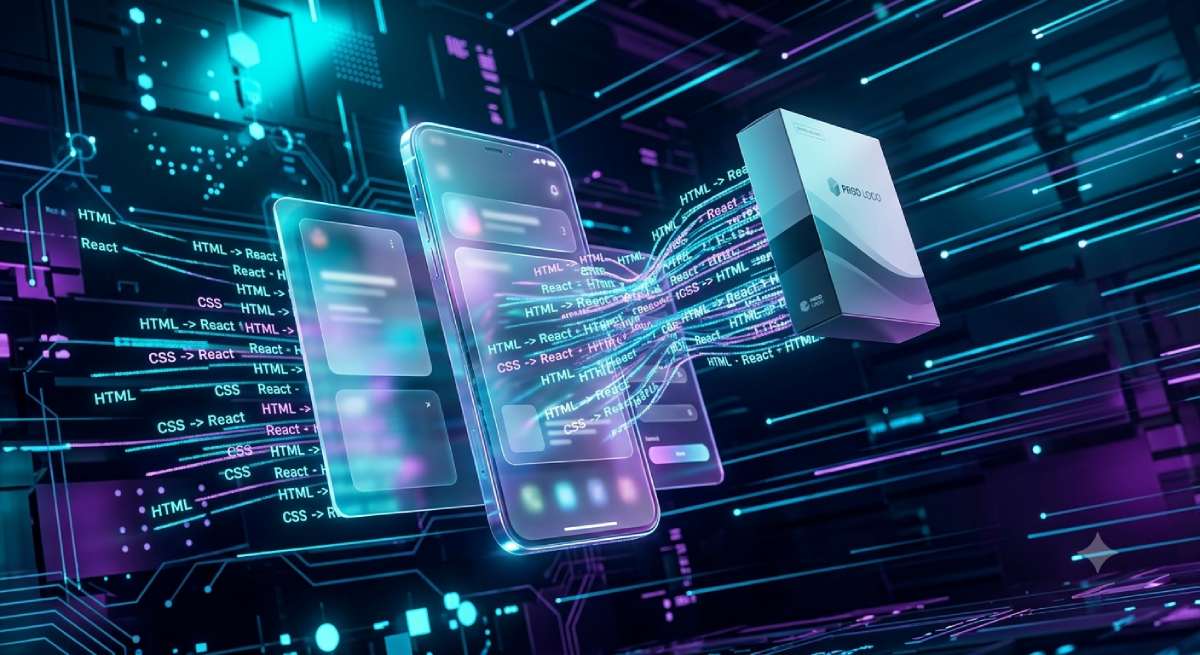
In previous decades, the gap between having a digital idea and deploying a functional application required immense capital, deep technical expertise, and months of engineering handoffs. Today, that friction has entirely evaporated. By utilizing advanced image-to-code AI tools, developers can capture a screenshot of a user interface, a Figma mockup, or even a hand-drawn napkin sketch, and instantly generate production-ready code. Whether it is capturing the sleek, card-based Product Hunt aesthetic or generating complex glassmorphism UI elements, the visual directly becomes the executable product.
This is not a gimmick; it is a fundamental restructuring of how software is brought to market. To fully decode this generational shift from ideation to delivery, we must analyze it through the lens of the SCAMPER framework. By breaking down this methodology, we can understand how the new generation of developers is matching rapid supply with ever-evolving consumer demand.
🧠 Decoding the Screenshot Era Using SCAMPER
The SCAMPER framework—Substitute, Combine, Adapt, Modify, Put to another use, Eliminate, and Reverse—is a classic tool for creative problem-solving. When applied to the modern "screenshot-to-code" AI development pipeline, it reveals exactly why this approach is dominating the market.
1. Substitute: Replacing Syntax with Visuals
The traditional requirement of manually typing out thousands of lines of front-end boilerplate has been entirely substituted. Instead of writing CSS grids, PHP logic, or React component hierarchies by hand, founders substitute visual inputs for syntax. A single screenshot acts as the ultimate prompt, instructing the AI on layout, padding, typography, and visual hierarchy, completely bypassing the manual coding phase.
2. Combine: Merging the UI/UX and Engineering Roles
Historically, design and engineering were strictly siloed. A designer would create a prototype, and an engineer would spend weeks translating it. The screenshot-to-code pipeline combines these roles into a single, seamless agentic workflow. A single product manager or developer can now simultaneously act as the UI architect and the front-end engineer, compressing the development lifecycle from months to mere minutes.
3. Adapt: Whiteboards to Working Prototypes
The new generation of AI tools adapts beautifully to low-fidelity inputs. Teams are adapting their brainstorming sessions; rather than throwing away a whiteboard map, they photograph it. The AI adapts the messy, human-drawn wireframe into a highly structured, semantic HTML interface, instantly moving the team from a raw idea to a testable Minimum Viable Product (MVP).
4. Modify: Scaling Ideation Speed
With the barrier to coding completely removed, what is being radically modified is the scale of experimentation. If it takes only 60 seconds to turn a screenshot into a web application, a developer can modify their business model, A/B test twenty different user interfaces, and pivot entire product lines in an afternoon. The speed of iteration has been magnified to a level previously thought impossible.
5. Put to Another Use: The Competitor as a Canvas
Perhaps the most aggressive tactic of the screenshot era is putting existing market assets to another use. If a developer loves the onboarding flow of a billion-dollar tech giant, they can simply screenshot it, feed it into an AI, and generate a customized, legally distinct structural clone for their own niche application. Industry inspiration is no longer just theoretical; it is literally the foundational codebase.
6. Eliminate: Destroying the "Handoff" Delay
The greatest source of friction in modern software development has always been the "handoff" between the design team and the development team. Miscommunications regarding pixel-perfect implementation, responsive states, and component behavior cost companies millions. AI eliminates this step entirely. The design is the code. If it looks right in the screenshot, it executes correctly in the browser.
7. Reverse: Inverting the Development Lifecycle
We have completely reversed the traditional Software Development Life Cycle (SDLC). Historically, developers wrote the backend server logic, built the database schemas, and then painted the front-end UI on top of it at the very end. Today, you start with the screenshot (the visual end-state), generate the front-end instantly, and then use AI agents to reverse-engineer the necessary database tables and API routes to support it. The visual drives the architecture, not the other way around.
📝 The Ideation-to-Delivery Readiness Questionnaire
To thrive in this new ecosystem, individuals and enterprises must audit their current workflows. Ask yourself and your team the following questions to determine if you are ready to capitalize on the "screenshot-to-sell" methodology:
- The Speed Audit: If a competitor launches a highly requested feature today, how many days (or weeks) does it currently take your team to sketch, code, and deploy a responsive counter-measure?
- The Friction Check: Are your designers and engineers currently trapped in endless revision loops regarding pixel padding and responsive layouts, or have you successfully automated the visual-to-code pipeline?
- The Asset Utilization: How many whiteboards, wireframes, and raw UX concepts are sitting dormant in your organization because you lack the raw "engineering hours" to test them?
- The Role Evolution: Is your team equipped to take a UI screenshot and generate a functional prototype themselves, or are they entirely dependent on a backlogged engineering queue?
- The Execution Mandate: If code is no longer the bottleneck, and execution speed is the only remaining competitive moat, what is preventing you from launching your next product iteration by Friday?
🚀 The Future of Supply, Demand, and Execution
The generation of builders entering the market today understands a fundamental economic truth: when the cost of producing software trends toward zero, the supply of applications becomes virtually infinite. If anyone can take a screenshot and launch a digital product, the manual code itself is no longer a competitive advantage.
The new dynamic of demand relies heavily on distribution, search engine optimization, brand trust, and solving hyper-specific, localized problems. As we fully embrace the reality that "if it's good enough to screenshot, it's good enough to sell," the winners will not be those who can write the cleanest manual syntax. The winners will be those who can observe a market inefficiency, capture the perfect visual solution, and execute the AI-driven deployment faster than anyone else. The barrier to entry is gone; the era of pure execution has arrived.